

Introducing Discharge Coordination: Send and Track Outbound Referrals Without Leaving exacare ai


TL;DR
Discharge Coordination enables skilled nursing facility teams to send outbound referrals to any recipient, track status updates, and manage discharge dates on a shared calendar, all directly within exacare ai.
Coordinating discharge is hard enough. Reporting on it later is even harder.
A resident is ready to be discharged, so a care team member starts the process the way it’s always been done: phone, fax, email, or whichever format the receiving provider accepts. Each recipient has different requirements, so the same clinical packet is re-typed, re-formatted, and re-sent several times. At some facilities, social worker turnover may run as high as 50%, so the person handling a referral today may not be the same person who handled it last month.
Then the chasing begins. Without a dedicated place to track statuses, teams have to keep tabs on multiple referrals at once, with no clear signal on whether referrals have been reviewed or even received. It’s easy to lose track of who’s gotten what: did we send the discharge package to the primary care physician? To the payer? And once confirmed, discharge dates constantly shift around, leading to frequent pings to social workers in the facility to check if a date is still current.
Tracking is only half the challenge. Reporting and ongoing collaboration is the other half. When the outbound referral process is spread across calls, faxes, emails, and personal notes, reporting on discharged residents usually means trying to reconstruct a timeline that was never recorded in one place. It becomes difficult to explain how or why a resident ended up where they did. And after a resident is placed, most facilities have no systematic way to check in on them. If a resident's health starts to decline, they’re more likely to end up back in the hospital than back in a skilled facility that could have cared for them.
That’s why we built Discharge Coordination, now available in exacare ai. It brings outbound referrals, partners and their contact information, status updates, and discharge dates into the same system teams already use for admissions and managed care. Information now follows the resident from admission through discharge, giving managed care teams, discharge planners, and social workers shared visibility on each resident’s care journey.
When information keeps up with the resident, teams can spend less time reconstructing what happened and more time moving care forward.
How it works
Give the whole team one view of upcoming discharges
Once a discharge is confirmed, the date may live in one person’s calendar, an email thread, or a note that the rest of the team cannot see.
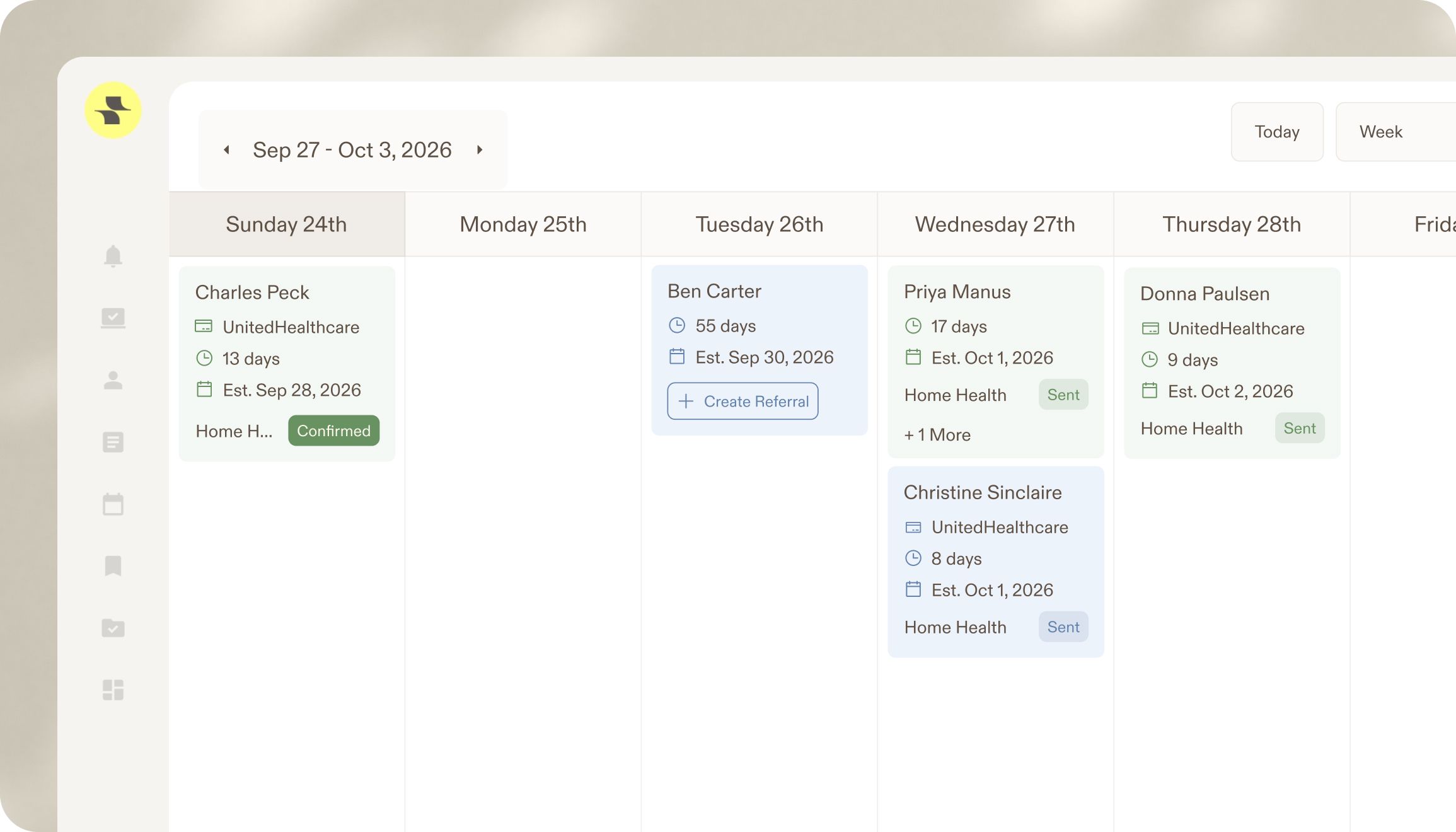
With Discharge Coordination, confirmed discharge dates sync automatically to the shared discharge calendar and bed board in exacare ai. Teams can see every upcoming discharge across the facility by date, so social services, nursing, therapy, and leadership have the same view of what is coming. That makes it easier to plan for open beds before they happen, not after.
Build your own provider network
Referral relationships often live with one person: in a social worker's head, in their spreadsheet, or in their notebook of contacts built up over years of phone calls and faxes. When that person leaves, so does the knowledge of who to call, who responds fastest, and who can provide the right care for the resident.
Teams can search and add their own recipients directly through the Provider Directory. Referral relationships live in exacare ai, not in any one person's notes or memory, so the next to take over doesn't have to start from scratch.
Send referrals to any recipient, on exacare ai or not.
A referral system is only useful if every provider partner can receive the resident information they need. Two questions often come up when teams consider a new way to send discharge referrals:
- Does the recipient have to be an exacare ai user?
- And, do they have to learn a new system or create an account?
No, and no. Discharge Coordination sends referrals securely to any type of recipient, including Dialysis, Home Health, Hospice, Skilled Nursing, Long-Term Acute Care, and durable medical equipment (DME) providers. Providers on exacare ai receive the referral within the platform, and everyone else clicks a secure link in their email to open it, with no account, login, or setup required.
Track status updates without picking up the phone
After a referral is sent, staff need to know whether the provider has received it, reviewed it, or needs something else. Today, this often means calling for an update.
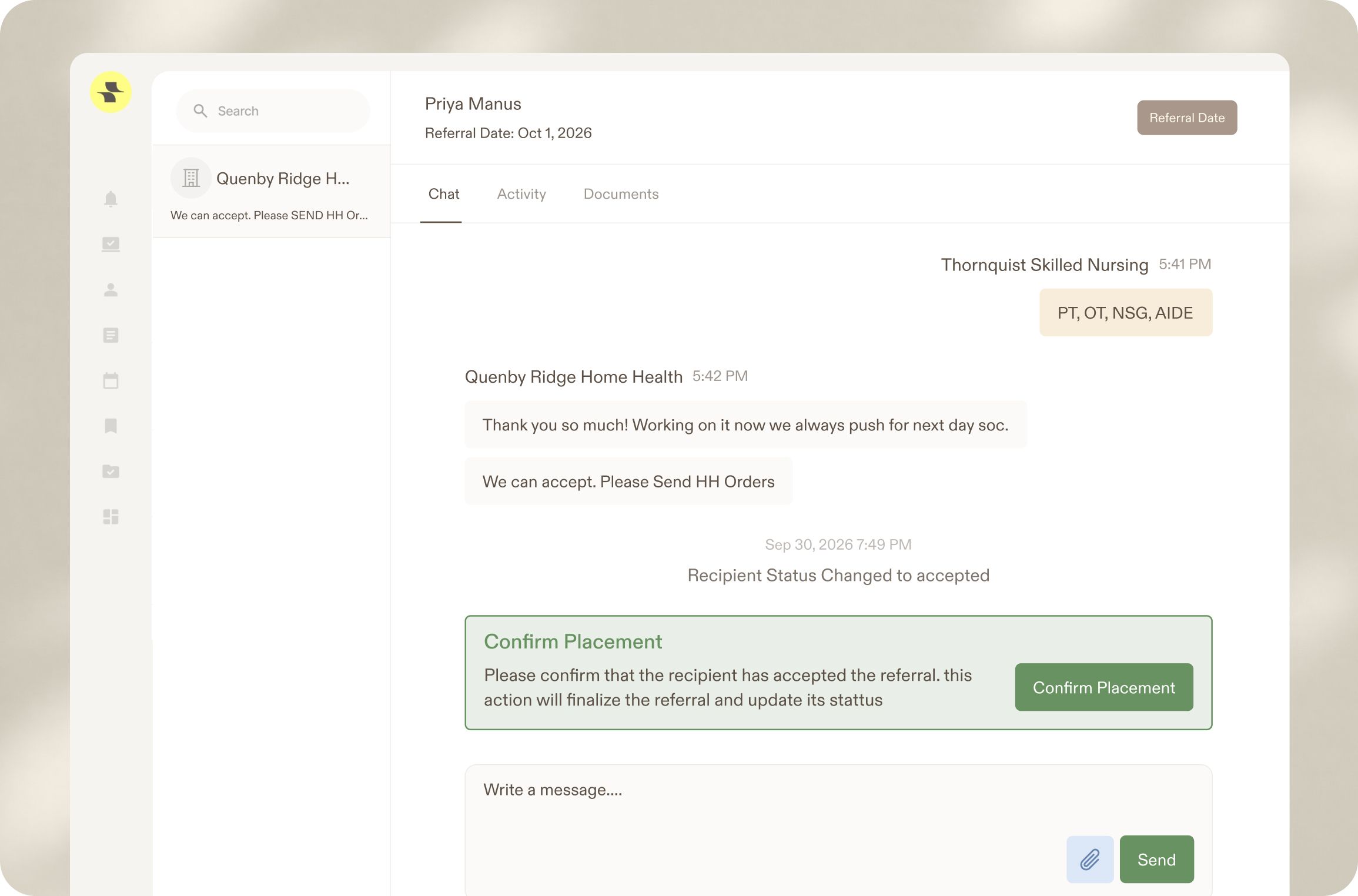
Discharge Coordination keeps all updates in one place. Staff can message the recipient through a two-way chat, see read receipts (just like your iPhone), upload documents, and review the timestamped activity log directly within exacare ai. There is one record of the referral and every follow-up, instead of a separate trail of calls and emails.
Manage admissions and outbound referrals in one system
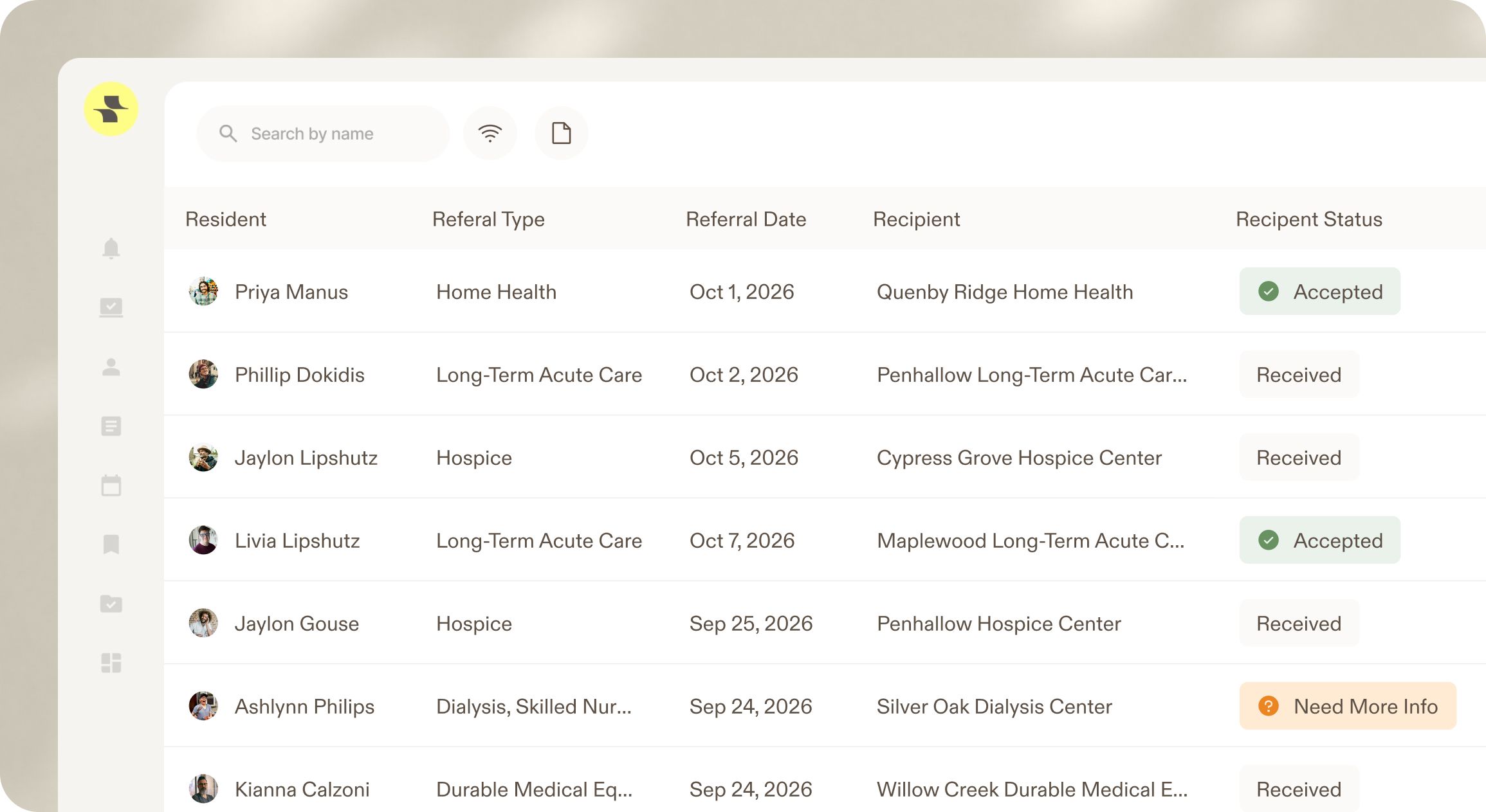
Discharge Coordination simplifies outbound referrals by replacing the mix of portals, emails, faxes, and phone calls teams often rely on to send and manage them. Staff can select the resident, choose a provider partner, review the information being sent, and send the referral directly within the outbound tab of exacare ai.
Keep authorization and discharge workflows connected
An insurance decision can change a resident’s discharge plan. An authorization denial or coverage change may require the managed care team to respond to the payer, while discharge planning teams or social workers need to coordinate the next setting of care.
When authorization work and discharge planning live in separate tools, staff have to pass updates through emails, phone calls, and spreadsheets. Important context can be delayed or missed.
Discharge Coordination runs in the same system that handles admissions and managed care authorizations, so teams don’t have to start over or pass resident context between separate tools. If a payer decision changes, managed care teams, discharge planning teams, and social workers are already working from the same information.
What customers are saying
Early users have been able to self-onboard and have already started sending referrals on their own. The value of Discharge Coordination has been simple:
"We went from a demo with leadership to all five buildings live in two weeks. The response from our teams has been overwhelmingly positive."
– Erin Price, Vierra Communities
What’s coming
Discharge planning often involves more than one provider. A resident may need home health, dialysis, equipment, or a primary care physician kept informed at the same time. Today, teams can send referrals to as many recipients as needed, one at a time. Soon, teams will be able to send one referral to multiple recipients at once, without re-entering the same information.
How to get started
For existing exacare ai customers, Discharge Coordination is available in the Outbound tab within the left-hand navigation of exacare ai. From there, teams can create and manage outbound referrals, follow conversations with provider partners, track referral status, and see upcoming discharge dates in the shared calendar.
If you don’t see Outbound in your left-hand navigation, your account’s super admin can grant you access, or you can reach out to your Operations lead for help.
If you are not yet using exacare ai and want a more organized way to send and track outbound referrals while keeping admissions, managed care, and discharge work connected, get in touch to learn more.
Share







Move your team forward
Move your team forward